Strategy & Transformation
Gaming & Esport: what does the future hold?
Kaci IDJAKIRENE
Publiée le March 24, 2023
Kaci IDJAKIRENE
Publiée le March 24, 2023
The future of gaming and esports can be measured and appreciated using current industry data: 3.2 billion players, $220 billion in sales, annual market growth of 17.8%. These are the figures for the gaming market in 2022. A market that has established itself as the world leader in the entertainment industry. Benefiting from an ultra-favorable context with the COVID pandemic, gaming alone now weighs more than the music and film markets combined. A worldwide phenomenon, on Youtube half of all videos on the platform concern gaming. A phenomenon in France too, video games have been the best-selling cultural product there every year since 2014.
Gaming touches all populations, all territories, and is practicable on mobile, computer or console. This is particularly important when it comes to understanding its growth. If soccer has established itself as the number one sport, it’s partly due to the spectacle it offers, but above all because it presents absolutely minimal barriers to its practice. Soccer can be played alone or with others, and all you need to start playing is a ball. Gaming tends to offer the same ease of use, thanks to the different platforms it can be played on. Behind every smartphone or computer owner lies a potential gamer.
Esport is a gaming niche, the term referring to the competitive practice of video games in which players compete online or face-to-face. First appearing in the 1970s in the United States, esport has grown up around local, national, continental and international competitions. Unlike classic sports, which developed from amateur strata to become professionalized, esport has been structured around professional organizations and is now starting to develop its amateur practice.
To date, three main types of practice have been defined by “France Esports” (an association working to promote and develop esport): leisure esport, amateur esport and professional esport. Leisure esport is the practice of esport outside the competition circuit, but with a ranking objective. Amateur esport, on the other hand, is the practice of esport with a ranking and occasional competition. Finally, professional esport refers to the practice of esport with a ranking and in competition as part of a salaried activity. Today, these competitions are extremely numerous, covering a multitude of different video games and, above all, attracting an ever-increasing number of participants and followers. In 2022, there will be over 640 million spectators at esport competitions, with estimated sales of $1.38 billion (up 13.4% year-on-year). As with the gaming market, France is following suit. The latest studies put the number of esport consumers in France at 10.8 million, with just over 2 million amateur players – a figure comparable to the number of members of the French Football Federation (France’s No. 1 sports federation). The market is booming, with an ever-growing following, and is logically attracting ever-increasing investment.
In esport, teams, clubs and structures compete on video games. These clubs bring together players and fans, esport followers who are extremely committed, in the same way as supporters of soccer clubs or even ultras. If this model works, it’s because today there’s a gaming influencer behind most esports structures. The most telling example in France is Karmine Corp, a structure created in 2020 by streamer Kamel “Kameto” Kebir and youtuber Amine “Prime” Mekri. Based on their respective communities, the two content creators have succeeded in federating an ever-growing audience around their club’s successes. In just under three years, Karmine Corp has played a major role in the development and democratization of esport, breaking the record several times for the total number of viewers for domestic esport competitions in France, organizing an event in their honor at Bercy (sold-out, with over 40,000 requests for tickets), and selling more Karmine Corp jerseys than any other Ligue 1 soccer club.
This social success and community involvement has obviously enabled esports to accelerate its development and attract more investors. First and foremost, through fund-raising: in a buoyant and increasingly competitive market, esports clubs need investors not only to support their growth, but also to meet their constantly rising operating costs. As an indication, here are the main funds raised by esports structures in recent years:
– Team Vitality (France): 34 million euros in 2019 then 50 million euros in 2022
– Cloud9 (USA): 50 million euros in 2018
– Fnatic (UK): 10 million euros in 2020 then 17 million euros in 2021
The first sports clubs were set up in students’ bedrooms, garages or network game rooms, bringing together a team of enthusiastic friends. Today, these same clubs have brand-new premises, state-of-the-art gaming equipment, pay players salaries that can top a million euros a year for a select few, and bring together professions ranging from coaching staff to marketing, mental trainers, graphic designers and merchandising project managers.
Another major expense for these clubs is the running of competitions, the main ones of which are organized in closed leagues. In other words, joining or leaving a league is not indexed to a club’s performance. Closed leagues offer a reduced number of places to take part in the competition, which are then awarded following submission of a club application and payment of a fee set by the competition organizer. Once acquired, the place can then be resold by the club holding it, with the organizer’s approval. Here, too, we see the effects of the sector’s hyper-growth through the inflation in the price of these closed-league tickets. The “LEC” is the highest European level of competition in the “League Of Legends” game from publisher Riot Games. This competition sees 10 European teams compete in a championship format, each having earned a “slot” (a place) in the competition. In 2018, the price of a slot in LEC was 8 million euros, and has been rising ever since. In 2021, the Swiss team “BDS” acquired the slot of the German team “Schalke 04” for 26.5 million euros, and in 2022 LEC slots were offered for 45 million euros. Today, slots are real financial investments.
In response to these expense items, the sources of revenue in the esport sector are clearly defined. The main sources of revenue for an esport club are endowments for competitions, sponsorship, merchandising and player sales. The future of gaming and esport will see revenues from the sale of event tickets and TV rights, which are not yet sufficiently representative in France and Europe.
Competition prizes take the form of cash prizes distributed among all participants according to their performance. While attractive cash prizes are awarded for only a handful of competitions, some are worth millions or even tens of millions of dollars. The winner of a major tournament on games like “Fortnite” or “Dota 2” will receive a more lucrative reward than the winner of a Grand Slam tournament like Roland Garros or Wimbledon.
These cash prizes are justified by the ever-growing audiences for esport competitions. The main tournaments attract millions of viewers, a young (mainly under 35) and committed audience, which justifies large entry tickets for advertisers from industries outside gaming. Sponsorship will be an integral part of the future of gaming and esport, taking three main forms:
– Sponsorship of a club, as a partner or jersey sponsor
– Sponsorship of a player who becomes a brand ambassador
– Sponsorship of an event/competition as an advertiser
While esport sponsorship used to be highly targeted and mainly attracted brands from gaming-related industries, today it has diversified. These include banks, car manufacturers and players in the agri-food industry, some of which are worth tens of millions of euros a year.
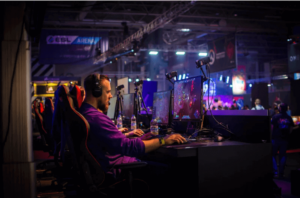
The future of gaming and esports will be multi-sectoral and premium. Gaming is everywhere, gaining market share and benefiting from demographic logic. Today’s consumers are yesterday’s GameBoy kids, tomorrow’s consumers are today’s Fortnite, Fifa and Valorant-playing college students. Luxury goods companies have already understood this. They come looking for young people, generation Z, and they use esport as a vector to create proximity with these young people. Esport is a perfect medium, constantly evolving, with infinite possibilities for sponsorship and, above all, a two-dimensional narrative, both in real life and inside the game. In real life, luxury brands partner players as ambassadors, teams as shirt sponsors and competitions as advertisers. For the League Of Legends World Championship Finals held every year, the trophy is presented in a Louis Vuitton trunk. The fact is all the more striking when you look at the list of competitions that benefit from this partnership: the Football World Cup, the Rugby World Cup, the NBA, the Roland Garros tournament, the Monaco Grand Prix, the America’s Cup, and therefore the League Of Legends World Cup.
Sponsorship is also developing in-game, with the creation and sale of cosmetic items to personalize players’ avatars. The main source of revenue for publishers, this sale of items, also known as “skins”, is a major source of income for the parties behind their creation and placement in stores. The game “Fortnite” has propelled this business model into the spotlight, announcing that it will obtain over $5 billion in revenue from the sale of skins by the year 2020. The practice has been democratized throughout the video game industry, and we can now find Louis Vuitton “skins” on League Of Legends, Balenciaga “skins” on Fortnite or Valentino “skins” on Animal Crossings. In-game advertising doesn’t stop there: video games are immersive, and the worlds they create are ever larger and more realistic. It’s only natural, then, that you’ll find billboards in video games, the same ones you’d see on the street, on the freeway or on the edge of a soccer pitch. They’re even more effective here, because the catchment area they cover is obviously much larger, and above all, the audience is much better targeted.
If these brands are banking on gaming and esports, it’s certainly because they may appear to be the magic answer to reaching Generation Z, but it’s also because they enable them to break into new markets. Brands have seized the opportunity, and esports is the perfect entry point for targeting Asian markets in particular. Asia is the world’s esport stronghold, led by South Korea and especially China, which is investing massively in the discipline. The local population consumes an enormous amount of esport-related content and assiduously follows competitions, to the point where scenes of jubilation can be seen in the streets when a Chinese team wins a major title. By associating themselves with esport, brands can benefit from the discipline’s visibility and popularity.
In addition to brands, major institutions and governments are also looking at the gaming/sports issue. The International Olympic Committee is studying the possibility of integrating esport into the competition, with games such as “Rocket League” and “Virtual Regatta”. Qatar, which has focused part of its development strategy on soccer, has since 2020 acquired an esport club in Hong Kong, the “PSG Talon”, in the same way as it bought PSG in 2011. Since 2020, several Gulf countries have launched major esport investments, creating clubs, buying clubs, and acquiring the organizing companies of major competitions (purchase of “ESL” and “FaceIt” for $1.5 billion in 2022). This is the case, for example, of Saudi Arabia, which, through Fayçal Ben Bandar Sultan Al Saoud, a member of the royal family, presented its “Vision 2030” project and its ambitions to achieve 20 billion in revenues by 2030 for the Saudi esport industry.
Although esport still represents a niche in the gaming market, its global impact and exponential growth present major challenges that require industry players to develop new business models and partnerships to sustain their growth, particularly in Europe and thus in France. The main challenges facing the sector are structuring the ecosystem and preparing for the arrival of TV rights.
The French public authorities have taken up the issue, and on January 16, 2023, the Ministry of Sports presented its strategic plan for the development of the sector. The structuring of the sector will involve a better mapping of the players in the field, draft legislation to regulate the activity and the supervision of amateur practice. Amateur esports must be able to find places to practice, probably in association with classic sports clubs, which already have facilities and are beginning to experience difficulties in attracting younger players. The creation of dedicated esport facilities should provide the sector with an additional source of revenue through regular ticket sales. Some major cities, such as Toronto and Shanghai, have even launched the construction of multifunctional stadiums that incorporate esport events into their design.
The second source of revenue for the sector is TV rights. While esport in Europe is almost exclusively broadcast on Twitch, with no subscription required, in the USA and Asia several major national media have acquired the rights to broadcast esport competitions. ESPN broadcast 20 esport competitions last year, and HUYA (Twitch’s Chinese equivalent) acquired the rights to broadcast the Chinese League Of Legends league in 2021 for $310 million, until 2025. This amount is comparable to the TV rights for Ligue 1 soccer in the early 2000s.
Gaming and esports are the ideal answers for companies seeking to reach younger generations, penetrate new markets, develop their reputation or modernize. Its growth also makes it an ideal subject for investment. The future of gaming and esports represents huge opportunities for companies. But to get started in this market, you need to understand the ecosystem, the way it works, the codes, so you can best assess the opportunities that exist and define your strategy. An education in the sector is a key success factor for all projects involving players from outside the esport sector wishing to enter it. Palmer Consulting firmly believes that gaming and esport are still in their infancy and will confirm all the promises they have shown us. And much more besides. That’s why we support companies in their gaming and esport projects, so that you can benefit from all the advantages these sectors have to offer, and turn high-impact projects into reality. To find out more about our consultancy services concerning the future of gaming and esport and the business challenges they pose for your sector, visit our dedicated Strategy & Transformation page.
To find out more about the future of gaming and esports, check out our sources :
https://www.france-esports.org/barometre-france-esports-resultats-edition-2022/#:~:text=ans%20et%20plus.-,Pr%C3%A9sentation%20des%20principaux%20r%C3%A9sultats,million%20par%20rapport%20%C3%A0%202021.
https://www.sell.fr/sites/default/files/essentiel-jeu-video/ejv_mars_21_web.pdf
https://www.blogdumoderateur.com/chiffres-cles-gaming-france-monde-2022/#:~:text=1%20%E2%80%93%20Plus%20de%203%2C2,joueurs%20%C3%A0%20travers%20le%20monde&text=Selon%20le%20Digital%20Report%202022,%25)%20pour%20compl%C3%A9ter%20le%20podium.
https://www.gqmagazine.fr/pop-culture/article/kcx-2-la-karmine-corp-enflamme-bercy-et-confirme-l-engouement-de-l-esport-en-france
https://www.lequipe.fr/Esport/Actualites/Un-plan-national-interministeriel-pour-developper-l-esport/1375151
https://www.sports.gouv.fr/faire-de-la-france-une-grande-nation-de-l-esport-et-donner-une-nouvelle-impulsion-la-strategie-1639
https://www.breakflip.com/fr/league-of-legends/actualites/prix-d-un-slot-en-lec-combien-couterait-une-place-en-franchise-en-2023-38973