Finance & Performance
Sustainable finance: investing in green bonds
Arthur Péniguel
Publiée le January 8, 2025
Arthur Péniguel
Publiée le January 8, 2025
In the face of the climate emergency, sustainable finance is playing an increasingly central role in investment strategies. Among the tools available, green bonds stand out as a powerful lever for financing projects with a positive impact on the environment. These bonds enable companies, governments and institutions to raise funds dedicated to ecological initiatives such as renewable energies, sustainable transport and natural resource management.
But behind the promise of a sustainable future, what risks and opportunities do green bonds actually entail?
The boom in green bonds has also led to a rise in the risk of greenwashing. This phenomenon, in which companies exaggerate or falsify the ecological impact of their projects, threatens to discredit the green bond market. Investors therefore need to rely on robust certifications, such as that offered by the Climate Bonds Initiative, to ensure that their investments are genuinely financing actions that benefit the environment.
Like all investments, green bonds carry financial risks. Some green projects, while ambitious, may be difficult to make profitable in the short term, exposing investors to uncertain returns. Greater transparency on the financial and environmental impacts of projects is therefore essential to boost market confidence.
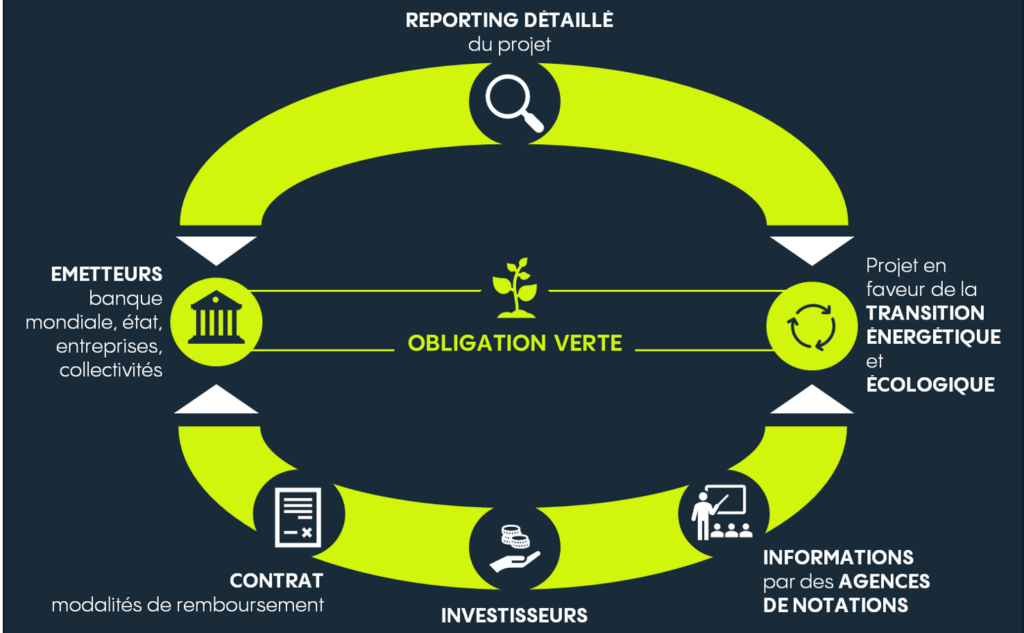
To protect investors and guarantee market integrity, strict regulations now govern green bonds. In Europe, the European Union Taxonomy and the Sustainable Finance Disclosure Regulation (SFDR) define clear criteria for distinguishing truly sustainable investments. These regulatory frameworks play a crucial role in aligning climate ambitions with financial objectives and ensuring that funds raised are allocated responsibly.
Despite the challenges, green bonds remain a key solution for building a low-carbon future. In 2023, their market passed the $2,000 billion mark in issuance, illustrating the massive commitment of economic players to impact projects. Through these bonds, companies can demonstrate their social responsibility, while attracting investors sensitive to climate issues.
Today, green bonds represent a unique opportunity to accelerate the ecological transition while generating returns. However, their effectiveness depends on sound regulatory frameworks and heightened vigilance against greenwashing.
At PALMER, we support our customers in structuring their sustainable finance strategies, maximizing the transparency, profitability and positive impact of their investments.
If you’d like to rethink your ESG strategy, get in touch with our expert teams today.